
Traditional home furnishings are increasingly failing to meet all the demands of younger people for a high-quality lifestyle; with the advancement and refinement of artificial intelligence technology, the smart home market continues to boom.
Looking back at the smart home market in 2018, hit products such as smart speakers and smart televisions emerged in rapid succession. The smart upgrades to these products have primarily centred on app clients, voice assistants and machine learning, and the features they offer are exceptionally diverse. So, what development trends might the smart home industry exhibit in 2019?
I. 5G and AIoT
At present, major industries are actively exploring the integration of AI and IoT as a fast track to the digital transformation of traditional sectors. Among these, the smart home sector has clearly become a key battleground. Major players, led by Xiaomi and Huawei, are all making strategic moves in this space. As the scope of smart homes expands, the number of participants continues to grow. As Zhou Jiong, General Manager of JD.com’s IoT Division, remarked, “AIoT will be the new engine driving growth in the smart home appliance sector. It will first take root in the home appliance industry; the curtain is rising on the intelligent transformation of this sector, and the era of the intelligent Internet of Things is upon us. Trillions of connections will reshape the way society produces and lives.”
In 2019, the advent of the 5G era has enabled smart home products to connect with a greater number of devices, and may also lead to the standardisation of the smart home industry. However, 5G will also present certain challenges, such as increased power consumption and the fact that smart home companies are not yet fully prepared. Overall, however, the opportunities outweigh the challenges, and 2019 may see the first signs of 5G technology making its mark in the smart home sector.
II. Whole-Home Smart Solutions
At present, most smart home manufacturers that have entered the market have already established their positioning and are seeking partners of comparable calibre to form alliances, continuously integrating product and industry resources to jointly build a more robust smart home ecosystem. For example, Huawei has partnered with JD.com to achieve interoperability between smart hardware, whilst Xiaomi has joined forces with IKEA to integrate IKEA’s smart lighting products into the Xiaomi smart home system.
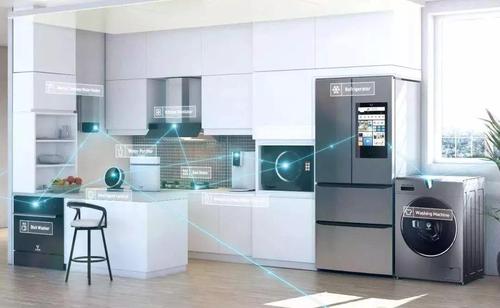
Judging by the various developments in the smart home industry in 2018, Zhijia.com believes that building a smart home ecosystem and creating whole-home intelligence may become the key themes for the industry in 2019, whilst the competition for the ‘entry point’ to smart homes is likely to slow down. This implies that, moving forward, players in the smart home sector will no longer be content with simply launching hit individual products, but will instead focus on widely implementing smart home living scenarios, truly striving towards interconnectivity and the Internet of Everything.
III. The Widespread Expansion of Platform Penetration
Smart home companies are leveraging the power of platforms to break down connectivity barriers. Significant progress has been made in ecosystem development, enabling greater device interconnectivity, the creation of smart scenarios and enhanced user experiences. IaaS and PaaS platforms established by internet giants such as Alibaba and Baidu; SaaS platforms built by middleware solution providers such as Yaguan and Tuya; interconnection platforms set up by the three major telecoms operators; and ecosystem platforms developed by smartphone manufacturers such as Xiaomi, Huawei and vivo are all utilising their platform capabilities to attract third-party hardware and build ecosystem barriers. This trend is expected to strengthen further in 2019.
Whether it is through core-level interactive hardware to attract and build a vast hardware ecosystem, through communication endpoints to integrate third-party devices, or through e-commerce channels or AI-enabled solutions to establish ecosystem barriers, all represent a major consolidation of resources within the smart home industry chain. The future will be characterised by win-win cooperation between platforms, ushering in a true era of interconnected smart homes.
The key to the battle for smart home platforms lies in ecosystem development. Driven by emerging technologies such as AI, big data and the Internet of Things (IoT), the traditional home appliance industry has embarked on a path of smart upgrades. However, such upgrades represent a comprehensive contest across technology, hardware, software and ecosystems. The next five years will be crucial for the smart home industry; whilst we cannot yet predict which players will emerge victorious in this battle, there is no doubt that this contest will be a comprehensive test of each player’s capabilities and ecosystem.

Scan the QR code to contact us