
Rumours have long circulated that Chengdu’s existing furniture industrial parks will be relocated—some within three years, others within five—following environmental regulations. These rumours are by no means unfounded! As the top-ranked ‘new first-tier’ city and a key component of the national strategy for central cities, Chengdu is undergoing rapid development, with its pace of change constantly evolving; this series of transformations will disrupt the existing industrial layout. On 26 September 2017, the Chengdu Municipal Planning Bureau provided a detailed public explanation of the city’s five major strategic plans for the future: ‘Eastward Expansion’, ‘Southern Expansion’, ‘Western Control’, ‘Northern Redevelopment’ and ‘Central Optimisation’. These plans are closely linked to the future fate of Chengdu’s furniture enterprises, as the plans make no provision for furniture-related manufacturing within the Greater Chengdu area.
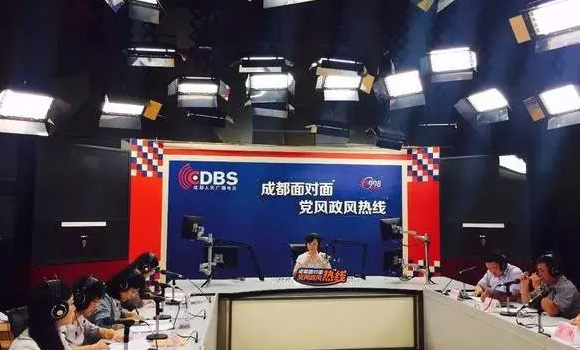
‘Eastward Expansion, Southward Expansion, Westward Control, Northward Renovation, Central Optimisation’: A Detailed Explanation of the Policy
Over the next five years, Chengdu will develop into a national central city that fully embodies the new development philosophy, establishing itself as the western economic centre, the western science and technology centre, the western financial centre, the western cultural and creative centre, the western centre for international exchanges, and a comprehensive transport and communications hub. Furthermore, Chengdu will optimise and expand its urban space, enhance the city’s liveability and comfort, and adhere to the ‘Eastward Expansion, Southward Expansion, Westward Control, Northward Renovation, and Central Optimisation’ framework to promote sustainable urban development.
Industrial Planning for the East, West, South, North and Centre
Eastward Expansion: Refers to the planning and construction of the Tianfu International Airport New Town and a modern industrial base along the eastern flank of Longquan Mountain, with a focus on developing advanced manufacturing and production-oriented services—serving as Chengdu’s new engine for innovation-driven development;
Southern Expansion: This involves the high-standard, high-quality development of the Tianfu New Area and the National Independent Innovation Demonstration Zone;
Western Control: This refers to the continuous optimisation of the spatial layout of ecological functions, the development of high-end green technology industries, and the preservation of the city’s form as an ecologically liveable, modern garden city.
Northern Transformation: This entails strengthening the ecological barrier in the northern region and accelerating the organic renewal of the city. Firstly, to enhance the community environment to make it conducive to both work and living; secondly, to elevate the capabilities of pillar industries; and thirdly, to enhance the ecological barrier function across the municipal area. The focus is on driving the development of the entire northern region by jointly establishing an industrial cluster with Deyang and Mianyang to the north, thereby promoting the coordinated development of the urban area.
Optimisation of the Central Area: Optimising the functions of the central urban area whilst reducing development intensity, building scale and population density.
Translated with DeepL.com (free version)
Key points regarding the furniture sector:
Jianyang adheres to the principles of industrial zoning, intensive development and cluster-based growth, driving the eastward shift of advanced manufacturing and production-oriented services. This has resulted in the formation of functional zones where industry and urban life are integrated—including the Airport New Town, Huizhou New Town, Jianzhou New Town and Jianyang urban area—thereby establishing a ‘second main front’ for economic and social development. The development model for Jianzhou New Town has shifted from the previous ‘industry, people, city’ approach to ‘city, people, industry’. (With a focus on residential development, industry has been marginalised; there is no space for furniture enterprises in Airport New Town.)
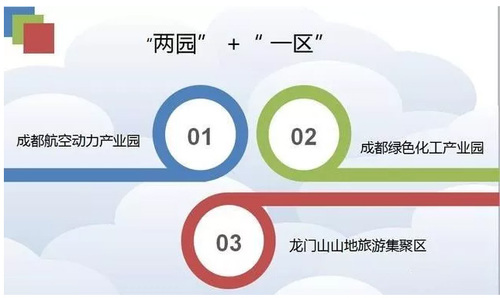
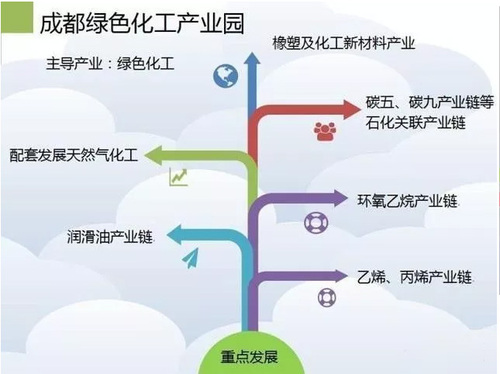
Pengzhou will prioritise the development of aviation and green industries in the future. (Furniture enterprises are not included within this scope.)
(Map source: Pengzhou Development and Reform Bureau)
The ‘Chongzhou-Dayi-Qionglai Western Control Zone’ is situated in the western part of Chengdu and comprises eight districts (cities) and counties. From north to south, these include: the portion of Pengzhou City west of the Chengdu–Mianyang Expressway duplicate line; Dujiangyan City; Pidu District and Wenjiang District (areas outside the Fifth Ring Road); Chongzhou City; Dayi County; certain areas of Qionglai City and Pujiang County. The total area of the city’s ‘Western Control’ zone is 7,185 square kilometres. The focus of this ‘Western Control’ initiative lies in regulating development intensity, industrial sectors and ecological red lines to achieve higher-quality and more sustainable development across the entire region. To this end, the Municipal Planning Bureau has formulated a planning strategy of ‘Three Controls and Three Strengthenings’ to realise higher-quality and more sustainable development within the Western Control zone. Land development intensity will be controlled, planning scales will be scaled back, and the acquisition of development space will be encouraged through urban regeneration and the relocation of low-end, low-efficiency industries.
In terms of industry, the “Western Control” area will also regulate industrial sectors in future, prioritising the development of green, low-carbon and technology-based industries. A list of industries to be phased out has been drawn up for existing industries, with those inconsistent with the area’s positioning to be gradually phased out. At the same time, standards for project access, environmental compliance and investment eligibility have been established for newly introduced enterprises. To promote the development of industrial parks within the “Western Control” zone, each park will be required to adhere to a single, clearly defined leading industry, develop advanced manufacturing, and enhance the park’s operational capabilities. (The focus will be on green and low-carbon industries; low-end manufacturing will be phased out. To remain, enterprises must adopt Industry 4.0 and upgrade to fully intelligent factories—a requirement that only 2 per cent of furniture enterprises can meet.)
The New Chengdu has no need for low-end manufacturing
Industry is the lifeblood of a city’s economic development. In the future, Chengdu will accelerate the establishment of a globally competitive industrial system. In accordance with industrial development strategies and urban functional zoning, Chengdu will scientifically define the industrial focus of 20 industrial parks and 10 industrial clusters, formulate industrial development catalogues and planning guidelines for these zones, promote the concentration of competitive industries and leading enterprises within specialised parks, and direct the allocation of high-quality resources towards these specialised parks. The city aims to nurture a cohort of local enterprises to join the ranks of China’s Top 500, the Top 500 Private Enterprises, and become industry leaders.
At the same time, Chengdu will also embrace the trend of cross-sectoral industrial integration by developing ‘2.5 industries’ such as research and development, design, marketing, settlement and logistics. This reporter has learnt that, in the future, Chengdu will be developed into the ‘Capital of Intangible Cultural Heritage’, the ‘Capital of Music’, the ‘Capital of Design’ and the ‘Capital of Conventions and Exhibitions’. The city will optimise the spatial layout of the cultural and creative industries, establish cultural and creative industry clusters and belts, and create a number of key cultural and creative industrial parks and distinctive cultural and creative districts. Priority will be given to the development of modern, emerging cultural sectors, whilst promoting the transformation and upgrading of traditional cultural and creative industries, thereby establishing a modern cultural and creative industrial system centred on music, cultural heritage, design, animation and film and television. Having said all this, it has absolutely nothing to do with furniture manufacturing.
A Dilemma: Beijing and Shenzhen Provide the Answer – Relocation is the Only Way Out
Beijing and Shenzhen, like Chengdu, are all major strongholds for furniture enterprises. Their cases can provide some guidance for Chengdu’s furniture enterprises. The *Beijing Catalogue of Prohibited and Restricted New Industries (2015 Edition)* explicitly lists furniture manufacturing as a key restricted industry. In fact, since being included in the restricted catalogue and categorised as falling under ‘non-core capital functions’, over a thousand furniture enterprises have been working feverishly to relocate.
Beijing: Relocation Without Exception – Not a Single One Left Behind
Regardless of who they are, all must relocate; not a single one is to be left behind. This is the situation facing Beijing’s furniture enterprises. Relocation is the only option. Although pollution from furniture production is a major issue, the fiscal revenue, labour market opportunities and investment incentives offered by this ‘hot potato’ are enough to make local authorities salivate.
The main receiving industrial parks include: the Tangshan Lutai Furniture Industrial Park, the Bohai Rim (Tianjin Hanggu) Furniture Industrial Park, the Beijing (Shenzhou) Home Furnishings Industrial Park, the Jiangsu Pizhou Guanhu Wood Products and Timber Structure Industrial Park, the Guangping Yungu International Home Furnishings Industrial Park, and the Beijing-Tianjin-Hebei Home Furnishings Industrial Park.

Scan the QR code to contact us